
Polarized vs. Non-Polarized Sunglasses: What’s Best for You?
When it comes to choosing the right sunglasses, it’s important to consider more than just style – you should also prioritize finding the best protection for your eyes. You’ve probably encountered polarized and non-polarized lenses, but it can be challenging to figure out which one is the best fit for you.
Both types have their unique benefits, and in this article, we’ll outline the pros and cons of each. We’ll help you understand the differences between the two and assist you in determining which option is perfect for you based on your lifestyle, needs, and daily activities.
Whether you’re looking for general eye protection or something more specialized, by the end of this article, you’ll have a clearer understanding of which kind of sunglasses will work best for you. So, let’s jump right in!
Contents
What Are Polarized Lenses?
First things first: what exactly does “polarized” mean?
Imagine light as waves traveling in all directions. When these waves hit a flat surface like water or a shiny car hood, they reflect in a uniform, horizontal pattern. This concentrated light is what we call glare, and it’s what makes you squint or struggle to see clearly.
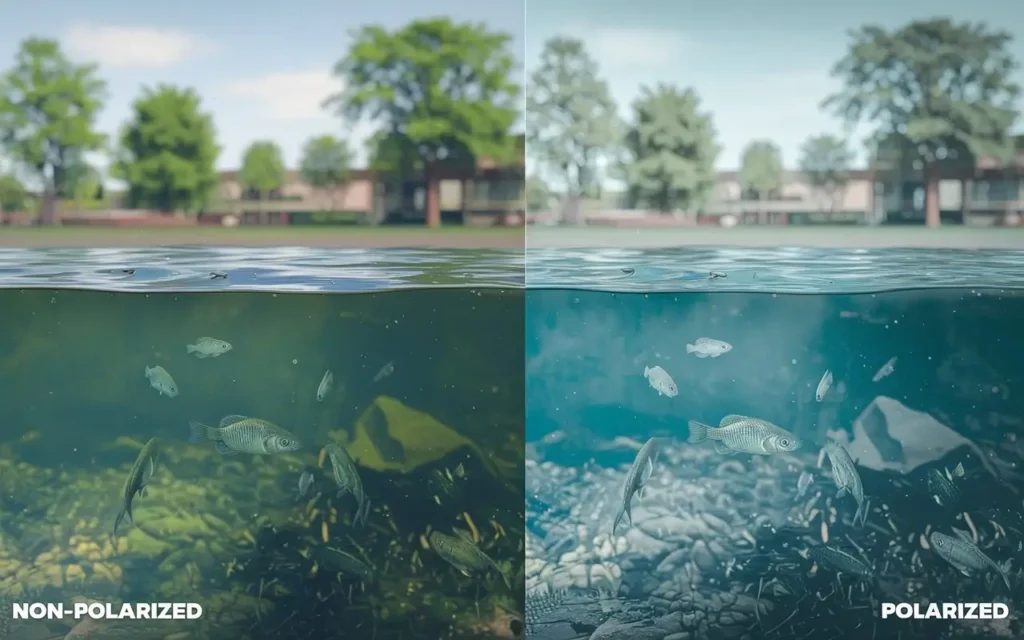
Polarized lenses have a special filter that blocks these horizontal light waves. It’s like a tiny venetian blind inside your lens, only letting in vertical light. The result? A major reduction in glare and much clearer vision.
Benefits of Polarized Lenses
- Glare Reduction: This is the biggie. By cutting out those pesky horizontal light waves, polarized lenses significantly reduce glare from reflective surfaces.
- Enhanced Visual Clarity: With less glare, you’ll see objects more clearly and with better contrast.
- Improved Color Perception: Colors often appear more vivid and true-to-life through polarized lenses.
- Reduced Eye Strain: Less squinting means less fatigue for your eyes, especially during long outdoor sessions.
- Better Vision in Bright Conditions: Polarized lenses excel in high-light environments like beaches, snow, or water.
Recommendation: For top-notch polarized protection, check out the Ray-Ban Polarized Aviator Sunglasses. They’re a classic style with premium polarized lenses.
Drawbacks of Polarized Lenses
While polarized lenses have some great perks, they’re not perfect for every situation:
- Higher Cost: Quality polarized lenses typically cost more than their non-polarized counterparts.
- LCD Screen Issues: The polarization can sometimes make it hard to read certain LCD screens, like car dashboards or ATMs.
- Not Ideal for All Activities: Skiers and pilots often avoid polarized lenses as they can mask ice patches or interfere with viewing certain instruments.
What Are Non-Polarized Lenses?
Non-polarized lenses are your standard tinted sunglasses. They work by darkening your view, reducing the overall amount of light that reaches your eyes. Think of them as putting a neutral density filter over your vision – everything gets a bit darker, but the light isn’t selectively filtered like with polarized lenses.

Benefits of Non-Polarized Lenses
- Affordability: Generally, non-polarized lenses are less expensive than polarized options.
- Versatility: They’re suitable for most activities without any special considerations.
- No Screen Issues: You won’t have any trouble viewing LCD screens or digital displays.
- Wide Range of Colors: Non-polarized lenses come in a huge variety of tints and colors.
Recommendation: For a stylish and budget-friendly non-polarized option, try the Fossil Rectangular Sunglasses. They offer UV protection without breaking the bank.
Drawbacks of Non-Polarized Lenses
- Less Effective Glare Reduction: While they do darken your view, non-polarized lenses don’t specifically target glare.
- Potential for Less Crisp Vision: In very bright conditions, you might not get the same level of visual clarity as with polarized lenses.
Who Should Choose Polarized Lenses?
Polarized lenses are a great choice for:

- Water Sports Enthusiasts: If you’re into fishing, boating, or beach activities, polarized lenses can dramatically improve your vision on the water.
- Drivers: Reduce glare from other cars and road surfaces for a safer, more comfortable drive.
- Outdoor Workers: If you spend long hours outside, polarized lenses can reduce eye strain and improve visibility.
- People with Light Sensitivity: Those with photophobia or who’ve had recent eye surgery often benefit from the extra glare protection.
Recommendation: For water sports, the Costa Del Mar Fantail Polarized Sunglasses are hard to beat. They’re designed specifically for life on the water.
Who Should Choose Non-Polarized Lenses?
Non-polarized lenses might be better for:
- Budget-Conscious Shoppers: If you’re looking for affordable sun protection, non-polarized lenses are often the way to go.
- Frequent Screen Users: If you’re constantly checking your phone or other digital devices outdoors, non-polarized lenses won’t interfere with your screens.
- Pilots and Skiers: These groups often need to see ice patches or read certain instruments that polarized lenses might obscure.
- Style Enthusiasts: With a wider range of color options, non-polarized lenses offer more variety for those who like to coordinate their shades with their outfits.
Recommendation: For a stylish non-polarized option that won’t break the bank, check out the Serengeti Summit Sunglasses. They offer a classic look with solid UV protection.
How to Test if Sunglasses Are Polarized
Not sure if your shades are polarized? Here’s a simple test:
- Find an LCD screen (like your smartphone or digital watch).
- Put on your sunglasses and look at the screen.
- Slowly tilt your head to the side at a 60-degree angle.
- If the screen darkens or appears black, your lenses are polarized.
When shopping, look for labels or tags that specifically mention polarization. Be wary of vague terms like “glare-reducing” – they might not be truly polarized.
Frequently Asked Questions
Q: Do polarized lenses offer UV protection?
A: Not necessarily. Polarization and UV protection are separate features. Always check that your lenses block 100% of UV rays, regardless of polarization.
Q: Can I get prescription polarized sunglasses?
A: Absolutely! Many opticians offer prescription polarized lenses. They might cost a bit more, but for many, the clarity is worth it.
Q: Do polarized lenses work at night?
A: It’s not recommended to wear any tinted lenses, polarized or not while driving at night. They can reduce your already limited visibility.
Q: Are expensive sunglasses always better?
A: Not always. While higher-end brands often use better materials, you can find good-quality, protective sunglasses at various price points. The key is to ensure they offer 100% UV protection.
Q: Can polarized lenses help with migraines?
A: Some migraine sufferers find relief with polarized lenses due to reduced glare and eye strain. However, it’s best to consult with your doctor for personalized advice.