
Sunglasses Care: Tips to Make Them Last
Sunglasses are more than just a style accessory; they’re an investment in protecting your eyes and completing your look. But like any investment, they need proper care to ensure they last. Scratched lenses, bent frames, and loose hinges can quickly turn your favorite pair into a source of frustration. With a few simple maintenance habits, you can keep your sunglasses looking sharp and functioning well for years.
In this guide, we’ll walk through practical tips on how to clean, store, and protect your sunglasses from daily wear and tear. Whether you’re rocking aviators, wayfarers, or sports shades, knowing how to care for them will not only extend their life but also help you get the most out of your investment. Let’s explore what you need to know to keep your sunglasses in top shape, no matter where life takes you.
Contents
Daily Handling: Treat ‘Em Right
First things first: how you handle your sunglasses daily can make or break their lifespan. Here are some golden rules to live by:
1. Two-Hand Rule
Always use both hands when putting on or taking off your sunglasses. This might seem like overkill, but it prevents uneven pressure that can warp the frame over time.
2. Head’s Up
Resist the urge to push your sunglasses up onto your head. It might look cool, but it stretches out the arms and can mess with the fit. Plus, hair products and oils can gunk up the lenses.
3. Safe Storage
When you’re not wearing them, store your sunglasses in a case. A hard case offers the best protection, but if you’re short on space, a microfiber pouch will do in a pinch. Speaking of which, check out the Oakley Carbon Sunglass case.
Pro Tip: Keep a microfiber cloth in your case. It’ll come in handy for quick cleanups and protect your lenses from scratches.
Cleaning 101: Keep ‘Em Clear
Nothing ruins a good look faster than smudged or dirty lenses.
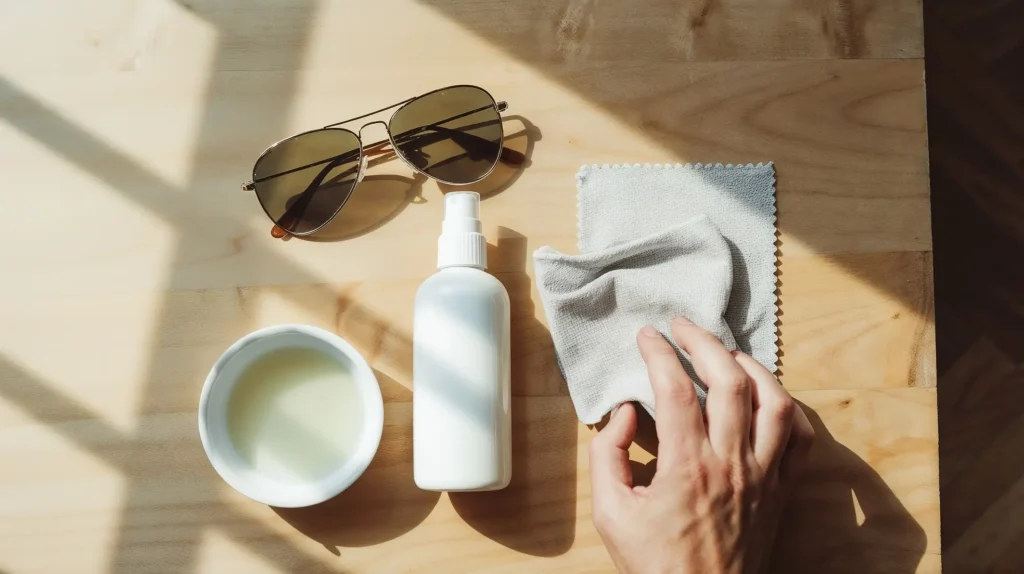
Here’s how to keep your view crystal clear:
What to Use
- Lukewarm water
- Mild, lotion-free dish soap
- Microfiber cloth
What to Avoid
- Paper towels or tissues (they can scratch)
- Your shirt (it might seem convenient, but it’s a no-go)
- Harsh chemicals or household cleaners
Step-by-Step Cleaning
- Rinse your sunglasses under lukewarm water to remove dust and debris.
- Put a tiny drop of mild dish soap on your fingertips and gently rub it over the lenses and frame.
- Rinse thoroughly to remove all soap.
- Gently shake off excess water.
- Dry with a clean microfiber cloth, using gentle circular motions.
For on-the-go cleaning, pre-moistened lens wipes are a lifesaver. These individually wrapped wipes are perfect for tossing in your car or bag.
Lens Love: Keeping Your View Crisp
Your lenses are the heart of your sunglasses. Here’s how to show them some love:
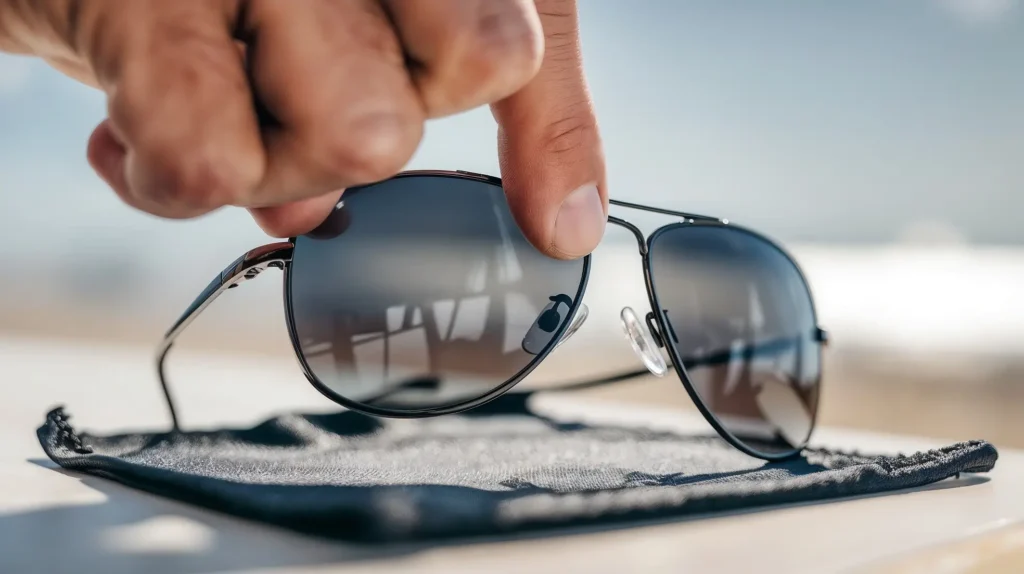
Dealing with Scratches
Minor scratches happen, but don’t panic. For plastic lenses, try this:
- Rub a small amount of non-abrasive toothpaste on the scratch with a microfiber cloth.
- Rinse and wipe clean.
- Repeat if necessary.
For deeper scratches or glass lenses, it’s best to consult a professional.
Replacing Lenses
Sometimes, a lens replacement is your best bet. Many high-end brands offer this service. It’s often cheaper than buying a new pair, especially for premium frames.
Special Care for Special Lenses
- Polarized lenses: Avoid extreme heat, which can warp the polarizing filter.
- Mirrored lenses: Be extra gentle to prevent the coating from flaking off.
- Prescription lenses: Clean them more frequently to prevent buildup that can affect your vision.
Frame Game: Keeping It Together
Your frames need love too. Here’s how to keep them in shape:
Adjusting Loose Screws
Tiny screws can work themselves loose over time. A small screwdriver kit is a worthy investment. Gently tighten any loose screws, but don’t overdo it – you might strip the screw or crack the frame.
Material-Specific Care
- Metal frames: Wipe with a slightly damp cloth to remove salt and sweat buildup.
- Plastic frames: Avoid leaving them in hot cars or direct sunlight for long periods to prevent warping.
- Wood frames: Use a soft, dry cloth to clean. Avoid water, which can damage the wood.
When to See a Pro
If your frames are seriously bent or a screw is completely missing, it’s time to visit an optician. They have the tools and know-how to fix issues without risking damage.
Battling the Elements: Environmental Protection
Your sunglasses face a lot out there. Here’s how to protect them from the world:
1. Temperature Troubles
Extreme heat can warp plastic frames and affect lens coatings. Never leave your sunglasses in a hot car or direct sunlight for extended periods.
2. Water Woes
While a little water won’t hurt, prolonged exposure can damage lens coatings and loosen screws. If you get caught in the rain, dry your sunglasses thoroughly with a microfiber cloth.
3. Sand and Dust Defense
Beach days are great, but sand can scratch your lenses. Always rinse your sunglasses with fresh water after a day at the beach or in dusty conditions.
Pro Tip: For beach trips, consider a pair of floating sunglasses straps. They’ll keep your shades safe if they take a dip in the ocean.
Time for New Shades? Signs to Watch For
Even with the best care, sunglasses don’t last forever. Here’s when to consider an upgrade:
1. Repairs Aren’t Cutting It
If you’re constantly fixing loose screws or bent frames, it might be more cost-effective to invest in a new pair.
2. Prescription Problems
For prescription sunglasses, update your lenses if your vision changes or at least every two years.
3. Damage Beyond Repair
Deep scratches that affect your vision, cracks in the frame, or damaged nose pads are all signs it’s time to move on.
4. Style Shift
Sometimes, your style evolves. It’s okay to treat yourself to a new look!
Wrapping It Up: Your Sunglass Care Cheat Sheet
Let’s recap the key points to keep your sunglasses in prime condition:
- Handle with care: Use both hands and avoid perching them on your head.
- Clean regularly: Lukewarm water, mild soap, and a microfiber cloth are your best friends.
- Store safely: Always use a case or pouch when you’re not wearing them.
- Protect from the elements: Avoid extreme temperatures and rinse after exposure to salt water or sand..
- Know when to let go: Sometimes, a new pair is the best solution.
Remember, a little effort goes a long way in extending the life of your sunglasses. With these tips, you’ll keep your shades looking sharp and your eyes protected for years to come.
Frequently Asked Questions
Q: How often should I clean my sunglasses?
A: Ideally, give them a quick wipe with a microfiber cloth daily and a thorough cleaning weekly or whenever they’re visibly dirty.
Q: Can I use eyeglass cleaner on my sunglasses?
A: Yes, as long as it’s specifically made for eyewear. Avoid general-purpose cleaners, which can damage lens coatings.
Q: Is it bad to clean sunglasses with water?
A: Water alone isn’t harmful, but it’s not the most effective cleaner. Use a tiny bit of mild soap for best results.
Q: How can I prevent my sunglasses from slipping down my nose?
A: Try adjusting the nose pads if your frames have them. For plastic frames without nose pads, an optician can help adjust the fit. You can also try anti-slip nose pads that attach to your existing frames.
Q: Are expensive sunglasses worth it?
A: High-quality sunglasses often offer better UV protection, durability, and optical clarity. However, you can find good protection at various price points. The key is to look for 100% UV protection, regardless of price.
Q: How long should sunglasses last?
A: With proper care, a good pair of sunglasses can last for several years. However, if you wear them daily, you might need to replace them every 1-2 years due to wear and tear.