
Dress Belts vs. Casual Belts: When to Wear Each
Belts may seem like a simple accessory, but they can make or break an outfit. Whether you’re dressing up for a business meeting or heading out for a casual lunch, choosing the right belt matters. In this article, we’ll clear up any confusion you might have about dress belts and casual belts and help you understand exactly when to wear each. By the end of this, you’ll be able to pick the perfect belt for any occasion with confidence.
Contents
Understanding the Basics: Dress Belts vs. Casual Belts
Before we dive into the specifics, let’s start with the basics. What makes a belt “dress” or “casual,” and why does it matter?
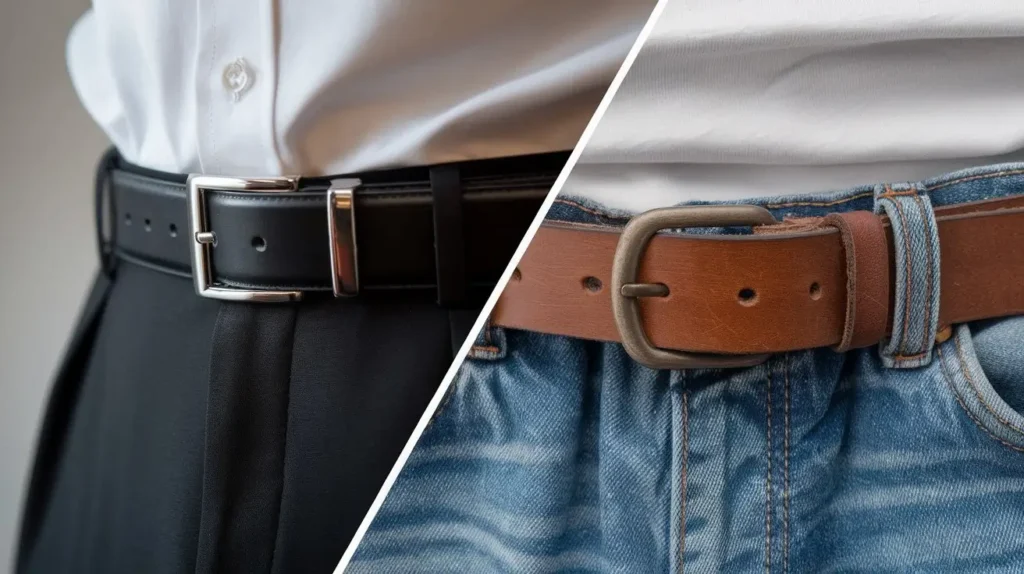
Dress Belts
A dress belt is designed for formal and professional settings. They are typically:
- Narrower (around 1-1.5 inches wide).
- Made from high-quality leather (either shiny or matte).
- Equipped with a simple, polished buckle (usually metallic, like silver or gold).
- Found in classic colors, especially black, brown, or burgundy.
Dress belts are all about subtlety and sophistication. They blend in with your outfit, rather than stand out, complementing your formal wear.
Casual Belts
Casual belts, on the other hand, are meant for more relaxed outfits and settings. These belts are:
- Wider than dress belts (usually around 1.5-2 inches).
- Made from a range of materials like leather, canvas, suede, or even braided fabric.
- Designed with bold or oversized buckles (think of Western-style buckles, for instance).
- Available in a wider variety of colors, from classic browns to adventurous reds and blues.
Casual belts allow for more freedom and creativity in your outfits, giving you the flexibility to experiment with textures, colors, and buckle designs.
When to Wear a Dress Belt
Dress belts are your go-to choice for formal settings, where sleek and polished accessories complete the look. Here’s when to wear a dress belt:
Formal Events
Events such as weddings, black-tie affairs, or formal dinners call for your most polished outfits. Dress belts here should always match the elegance of your attire, usually paired with:
- Suits (including tuxedos).
- Dress pants.
- Oxford or brogue shoes.
Recommendation: For a versatile, high-quality dress belt, I recommend the BOSS Grain Embossed Leather Belt. It’s sleek, durable, and pairs perfectly with any formal outfit.
Business Settings
If you’re heading to a business meeting, conference, or any professional event, a dress belt is the way to go. The rule is simple: If you’re wearing a suit, blazer, or even just dress slacks, you need a dress belt to keep things sharp.
Pro Tip: Match the metal of your belt buckle to your other accessories, like your watch or cufflinks. It’s a small detail, but it shows attention to style.
When to Wear a Casual Belt
Casual belts, as the name suggests, are meant for more relaxed outfits and occasions.
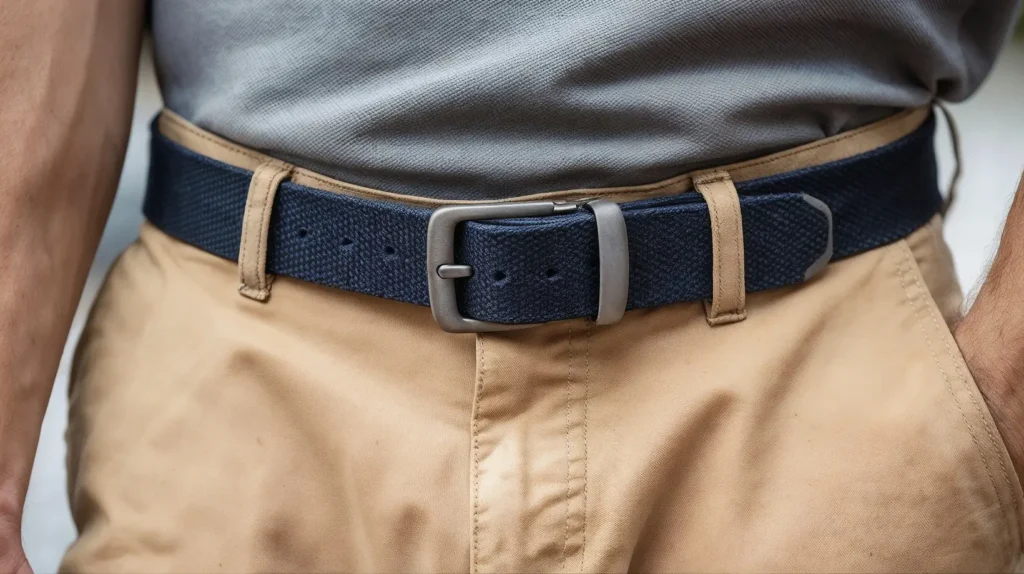
Here’s when a casual belt fits right in:
Everyday Outfits
If you’re dressing for a casual day out—whether it’s a weekend lunch, running errands, or meeting friends—a casual belt is your best choice. It pairs well with:
- Jeans
- Chinos
- Casual shoes like sneakers or loafers
Casual belts allow more flexibility with materials and colors. For example, a leather belt with a bold buckle can add some edge to a pair of jeans, while a canvas belt might give a more relaxed vibe.
Recommendation: The Tommy Bahama Casual Overlay Belt is perfect for adding a laid-back touch to your everyday jeans or chinos. It’s a sturdy option that’s both comfortable and stylish.
Casual Fridays
Even in semi-professional settings like Casual Fridays at work, casual belts can be appropriate, as long as the rest of your outfit is on the relaxed side. Think:
- Khakis or chinos.
- A button-down shirt without a tie.
- Casual leather shoes or loafers.
Just be sure to avoid wearing a casual belt with anything too formal (like a suit). It will clash and give off a mismatched vibe.
Matching Your Belt to Your Outfit: A Simple Guide
To simplify things, here’s a quick guide to help you decide which belt to wear based on your outfit:
- Formal Outfit (Suit, dress shoes): Wear a dress belt in matching leather and buckle finish.
- Smart-Casual Outfit (Blazer, chinos, loafers): Opt for a sleek but slightly wider belt, such as a casual leather belt.
- Casual Outfit (Jeans, sneakers): Go for a casual belt, like a canvas or braided leather option. Feel free to experiment with color and texture.
Common Mistakes to Avoid
Even seasoned fashion enthusiasts sometimes get belts wrong. Here are some common mistakes to watch out for:
- Wearing a Casual Belt with a Suit
This is a common mistake and can ruin a polished look. If you’re wearing a suit, always choose a dress belt. A casual belt with jeans? Perfect. A casual belt with a formal outfit? Not so much.
- Mismatching Belt and Shoe Colors
If you’re wearing black shoes, avoid brown belts at all costs, and vice versa. Matching the two creates a seamless and put-together look. A simple rule to live by: black with black, brown with brown.
- Overusing Bold Buckles
Big, statement buckles can be fun with casual outfits, but they have no place in formal wear. Stick to simple, polished buckles when dressing up.
FAQ
- Can I wear a dress belt with jeans?
Technically, yes, but it might look out of place. Dress belts are designed for formal outfits, so wearing one with jeans could create a mismatch. A casual leather belt works better for denim.
- How wide should a dress belt be?
Dress belts are generally narrower, around 1-1.5 inches wide. This gives them a sleeker, more sophisticated appearance that pairs well with formal attire.
- Are canvas belts only for casual outfits?
Yes, canvas belts are typically reserved for casual outfits. They work best with jeans, chinos, or other relaxed styles and are perfect for adding a bit of texture and color to your look.
- Can I wear the same belt for both formal and casual outfits?
It’s best to have separate belts for formal and casual occasions. A dress belt looks out of place with casual outfits, and a casual belt can make formal wear look too laid-back.
- What color belts should I start with?
If you’re building a belt collection, start with black and brown. These two colors cover almost all your needs, whether you’re dressing up or going casual.
Now that you’re equipped with everything you need to know about dress and casual belts, you can confidently elevate your style, no matter the occasion!