
What Are Watch Complications, and Do You Need Them?
Watches are more than time machines—they’re mechanical storytellers strapped to your wrist. Each tick represents centuries of human innovation, where tiny gears and intricate mechanisms transform a simple accessory into a sophisticated companion.
Watch complications are the hidden heroes of horology—functional features that elevate timekeeping from mundane to extraordinary. Imagine a single device that tracks lunar cycles, displays multiple time zones, and chronicles your day—all without charging or clicking an app.
In this article, we’ll break down everything you need to know about watch complications—what they are, how they work, and whether they’re right for you. By the end, you’ll have a clear answer and won’t need to look elsewhere. So, let’s find out if these fancy features are a must-have or just a nice-to-have.
Contents
- What Exactly Are Watch Complications?
- Types of Watch Complications (Beginner-Friendly Breakdown)
- Why Do Watch Complications Exist?
- Do You Really Need Watch Complications?
- Pros and Cons of Watch Complications
- How to Choose the Right Complication for You
- Final Thoughts: Are Watch Complications Worth It?
- FAQ About Watch Complications
What Exactly Are Watch Complications?
Let’s start with the basics. A complication is a horological term for any function a watch performs aside from displaying hours, minutes, and seconds. Think of them like apps on your smartphone—each one adds a new capability.
For example:
- A date display shows the day of the month.
- A chronograph acts as a stopwatch.
- A moon phase indicator tracks the lunar cycle.
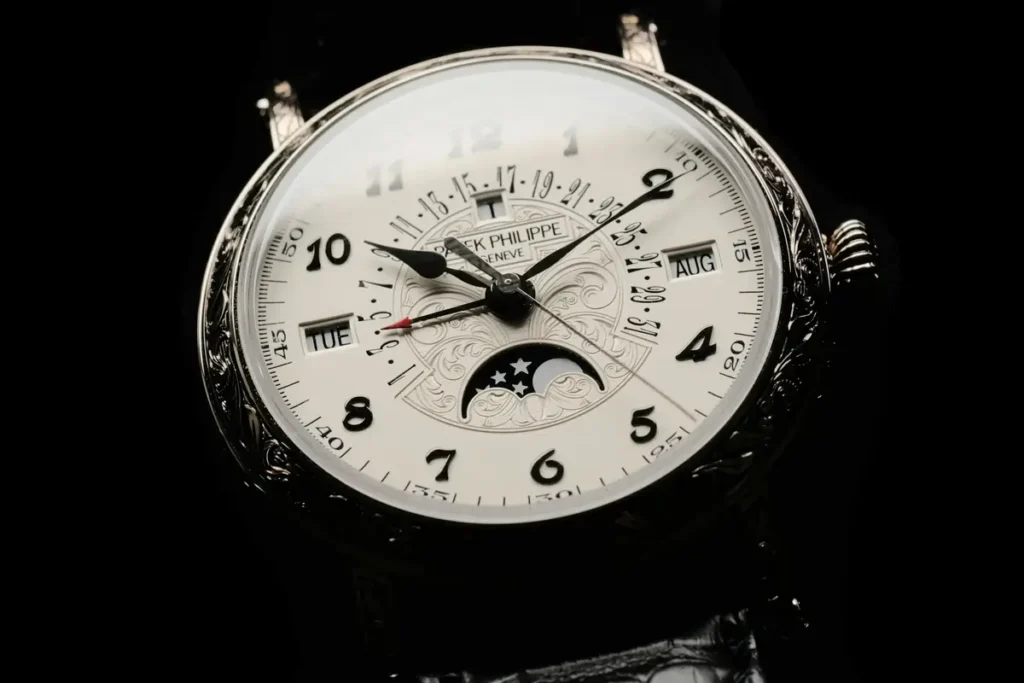
Complications can be simple or incredibly complex, depending on the watchmaker’s skill and the wearer’s needs. But why do they exist in the first place? Let’s dive deeper.
Types of Watch Complications (Beginner-Friendly Breakdown)
Not all complications are created equal. Some are practical, while others are purely for show. Here’s a breakdown of the most common types:
1. Simple Complications
These are the most basic and widely used features:
- Date Display: Shows the day of the month. Perfect for everyday wear.
- Example: The Fossil Everett is a classic, affordable watch with a clean date display at the 6 o’clock position.
- Day-Date: Adds the day of the week to the date display. Great for professionals who need to keep track of meetings and deadlines.
- Example: The Bulova Classic Surveyor combines elegance with practicality, featuring a day-date complication.
2. Intermediate Complications
These add more functionality and are ideal for specific needs:
- Chronograph: A stopwatch function that lets you time events with precision. Popular among athletes and racers.
- Example: The Seiko Prospex Speedtime is a sleek, sporty chronograph that won’t break the bank.
- GMT/Dual Time Zone: Displays two time zones at once. A must-have for frequent travelers.
- Example: The Citizen Promaster GMT is a reliable GMT watch powered by light.
3. Advanced Complications
These are the pinnacle of watchmaking artistry:
- Moon Phase: Tracks the lunar cycle. A poetic and visually stunning feature.
- Example: The Tissot Carson Premium Moonphase offers a moon phase complication at a relatively accessible price point.
- Perpetual Calendar: Automatically adjusts for months and leap years. No manual tweaking needed.
- Example: The Longines Master Collection is a stunning example of a perpetual calendar watch.
- Tourbillon: Counters gravity’s effect on accuracy. A rare and expensive complication that’s more about craftsmanship than practicality.
- Example: The Tag Heuer Carrera Tourbillon is a luxury piece that showcases this intricate complication.
Why Do Watch Complications Exist?
Complications weren’t created just to make watches look fancy. They were born out of necessity. For example:
- Pilots needed GMT watches to track multiple time zones.
- Divers needed water-resistant watches with elapsed time tracking.
- Business professionals needed date displays to keep their schedules on track.
Today, complications are a blend of functionality and artistry. They showcase the skill and creativity of watchmakers while adding value to the wearer. But let’s be honest—some complications, like the tourbillon, are more about prestige than practicality.
Do You Really Need Watch Complications?
This is the million-dollar question. The answer depends on your lifestyle, needs, and budget. Let’s break it down:
Practicality vs. Aesthetics
If you’re a minimalist, a simple three-hand watch might be all you need. But if you love gadgets or have specific needs (like tracking multiple time zones), complications can be incredibly useful.
Lifestyle Considerations
- Frequent Traveler? A GMT or world timer is a game-changer.
- Avid Runner or Swimmer? A chronograph or dive watch could be your best companion.
- Business Professional? A date or day-date complication might be ideal.
Budget Factor
Complications add to the cost. Ask yourself if the feature is worth the extra investment. For example:
- A date display is affordable and practical.
- A perpetual calendar is expensive and often unnecessary unless you’re a collector.
Pros and Cons of Watch Complications
Before you decide, let’s weigh the pros and cons:
Pros
- Add functionality and versatility to your watch.
- Showcase craftsmanship and mechanical ingenuity.
- Can be a conversation starter or a statement piece.
Cons
- Increase the price and maintenance costs.
- Can make the watch bulkier or harder to read.
- Some complications are rarely used in daily life.
How to Choose the Right Complication for You
Choosing the right complication doesn’t have to be overwhelming. Here’s a step-by-step guide:
- Assess Your Needs: Start by asking: What do I actually need this watch for?
- Match Your Lifestyle: If you’re a business professional, a date or day-date complication might be ideal. For adventurers, a chronograph or GMT could be more useful.
- Consider Maintenance: More complications mean more moving parts, which can require more servicing.
- Start Simple: If you’re new to complications, begin with something practical like a date display or chronograph.
Final Thoughts: Are Watch Complications Worth It?
So, do you need watch complications? The answer depends on you. If they align with your lifestyle, budget, and taste, absolutely. If not, a simple timepiece might be all you need to stay timeless.
Here’s the bottom line:
- For Practicality: Stick to simple complications like date displays or chronographs.
- For Prestige: Explore advanced complications like moon phases or tourbillons.
- For Beginners: Start with an affordable watch that has one or two useful features.
At the end of the day, it’s about what works for you. Watches are personal, and the best one is the one that fits your life and makes you happy.
FAQ About Watch Complications
1. What is the most useful watch complication?
The date display is the most practical and widely used complication.
2. Are complicated watches harder to maintain?
Yes, more complications mean more moving parts, which can require more frequent servicing.
3. Can I get a watch with complications on a budget?
Absolutely! Brands like Seiko and Citizen offer affordable watches with useful complications.
4. Do complications affect a watch’s accuracy?
Not necessarily. High-quality watches are designed to maintain accuracy even with multiple complications.